


Thinking of buying staggered wheels for your ride? Let’s go through the basic elements of staggered fitment before you make up your mind and whether it will be applicable to your vehicle.
Staggered Wheels Meaning
Staggered wheels mean the wheels on the back of the vehicle are a different size than the front. The most common staggered wheels fitment will be wider wheels in the rear of the vehicle, such as 20×8.5 front and 20×10 rear. This wheel configuration is common for rear-drive vehicles, like the Ford Mustang and Chevrolet Corvette or similar high-performance vehicles.
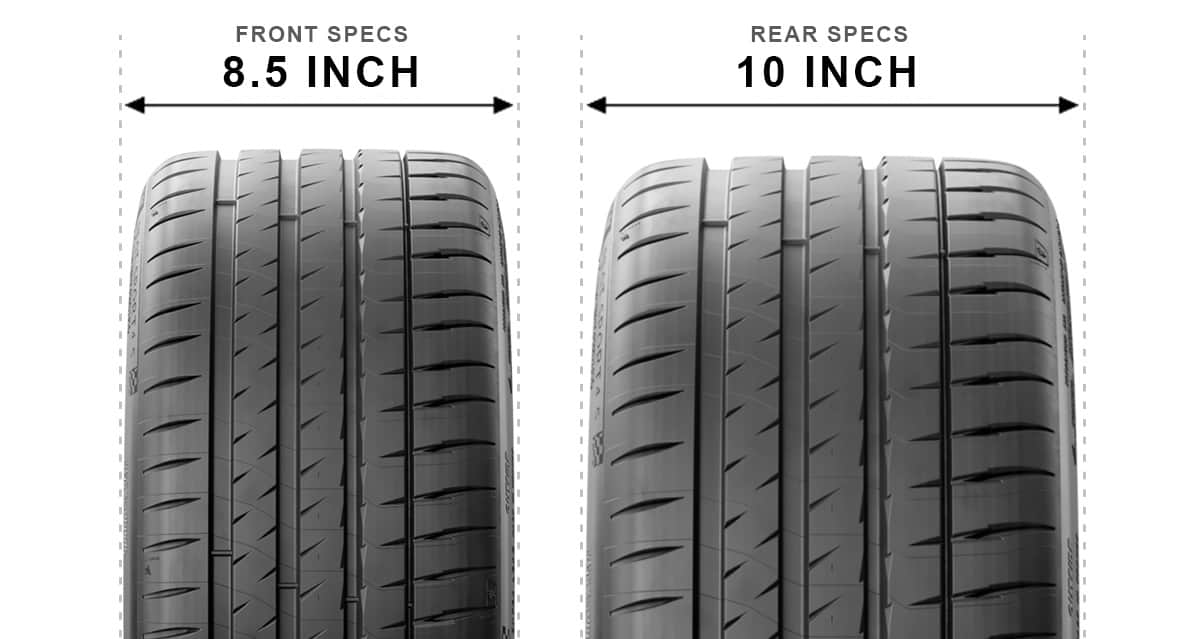
Moreover, staggered wheels can also be found on front-wheel drive (FWD) and all-wheel drive (AWD) vehicles such as Holden Commodore, Nissan GTR, Porsche, Audi R8, many BMW applications, Mercedes Applications, Ford and more.
On some vehicles, such as the Acura NSX and Ferrari 360, as well as other sports cars you will find rims in the rear that are both wider, and usually 1 inch larger in diameter. This could be a 19×9 front and 20×10 fitment configuration.

BMW M4 | Staggered wheels 20×8.5 Front and 20×10 Rear. The rear wheels are wider, with larger dish, deeper concave, and wider tyres.
Large Selection of Staggered Wheels And Tyres
CNC Wheels is your wheel fitment specialist and has been specializing specifically in staggered wheel and tyre fitments for over 15 years. We have the largest selection of staggered wheels in sizes ranging from 18″ to 22″. Simply enter your vehicle make and model in the search box and check out the staggered wheels we have. We’ve made it simple to find every possible fitment for your vehicle so give it a try, and if you have any questions, our wheel fitment specialists are available to answer your questions.
Pros of Staggered Wheels
There are many advantages to staggered wheels and tyres fitment. We mentioned two big ones in our overview.
- Better performance: The right vehicle will have a more commanding presence and benefit from performance benefits thanks to enhanced road grip when outfitted with larger or wider wheels and tyres in the rear.
- Stability: In addition to performance, larger or wider tyres in a vehicle’s rear can also mean enhanced ride stability, especially when it comes to performance vehicles that you don’t want veering from side to side when you put the pedal to the metal. In addition, staggered wheels also often permit more responsive braking and better cornering.
Cons of Staggered Wheels
Now that we’ve gone over the advantages of staggered wheels, it’s time to look at the disadvantages.
- Rotating tyres: With tyres of two different sizes, you can’t rotate the tyres from front to back to maintain even tread wear. Instead, you have to be sure that the tyres are rotated laterally, whether you do it yourself or have them professionally rotated. Failure to consider this could be very detrimental.
- Convenience: Purchasing a new set is slightly more complicated with 2 different sizes.
 Mercedes S65 AMG | Staggered wheels 20×8.5 Front and 20×10 Rear. The rear wheels are wider with a deep concave profile and wider rear tyre grip.
Can You Put Same Size Tyres on Staggered Wheels?
As a matter of fact, the tyres will fit just fine. They just won’t look or be staggered. It will be cheaper than buying staggered tyres. Still, you also be taking full advantage of having wider wheels in the rear discussed above other than the visual lip or concavity difference.
As you can see, staggered wheels and tyres make sense in many situations for various vehicle types. For more information on staggered wheels and tyres, and to check out our selection of products available, be sure to contact CNC Wheels or visit www.cncwheels.com.au/.
Popular Staggered Wheel Brands


